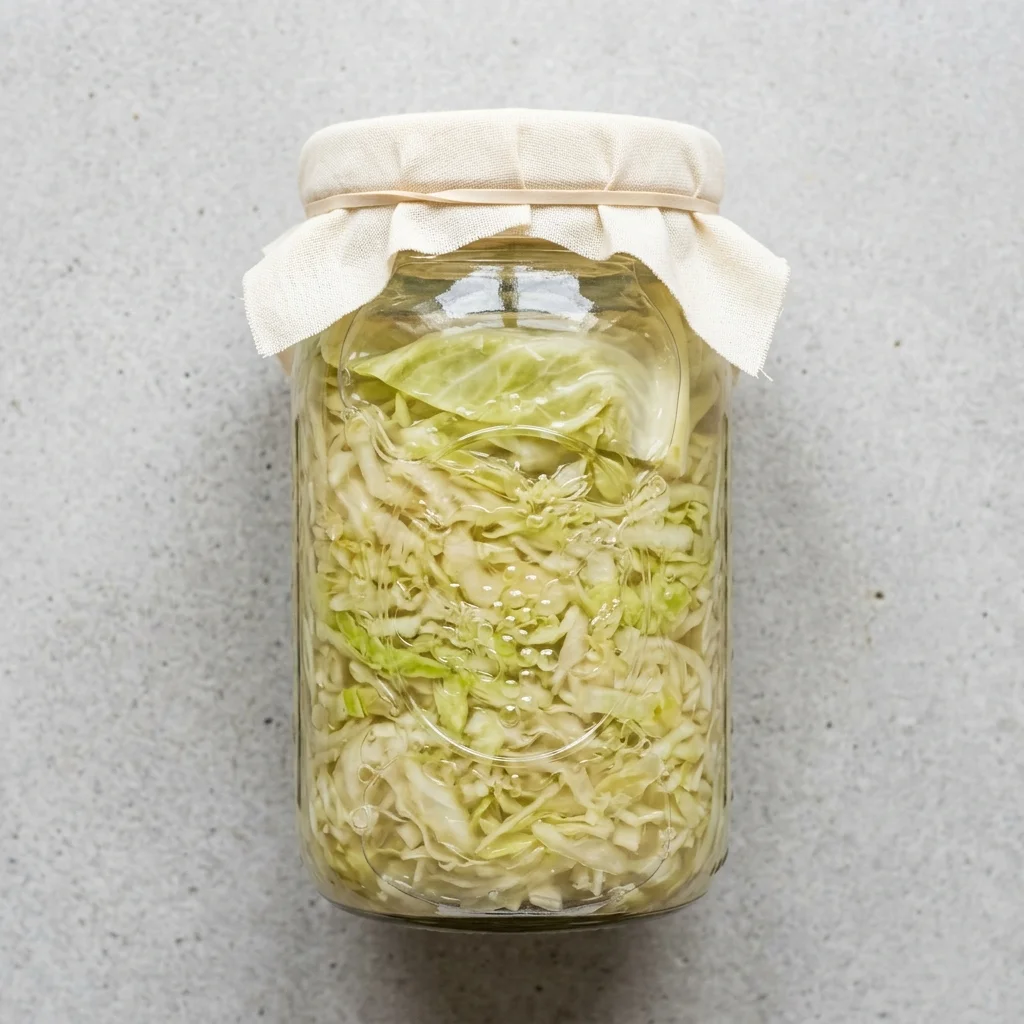
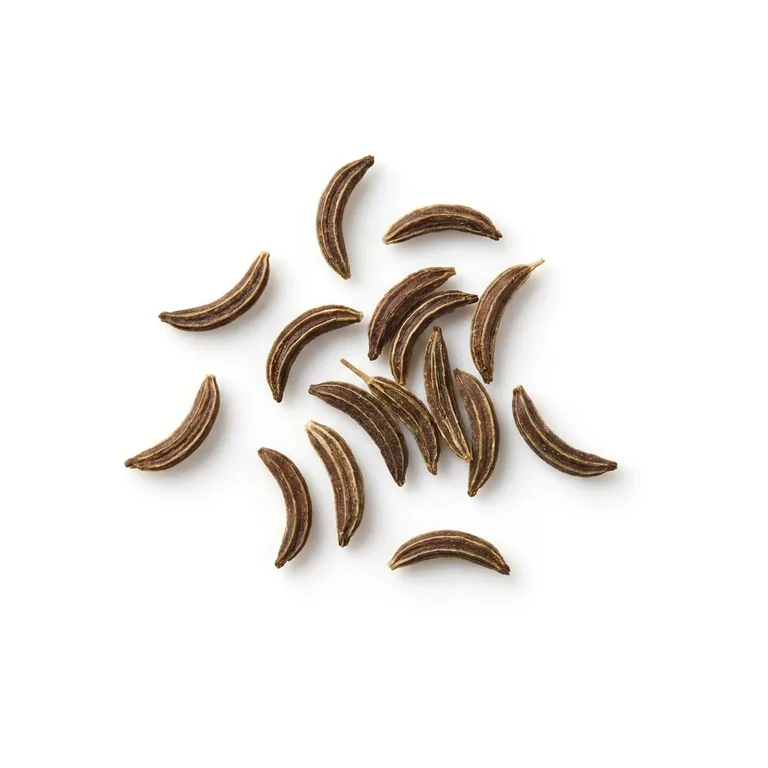
Tangy, funky, and deeply satisfying, homemade sauerkraut is one of those fermented staples that tastes nothing like the jarred stuff from the grocery store. The whole process comes down to just cabbage and salt — the cabbage does the work itself, releasing its own brine and slowly transforming into something bright and complex over the course of a week or more. Caraway seeds are optional but add a subtle earthy warmth that makes the finished kraut feel a little more special. Because the ingredient list is so stripped back, this is naturally free from the cross-contamination concerns that can make packaged fermented foods tricky — you know exactly what went into the jar. Massaging the cabbage until it goes limp and pools with liquid is the key step that makes everything else work, so don't rush it. From there, patience is your main ingredient: taste it at seven days, then keep going until the sourness hits just the way you like it. Pile it on sausages, layer it into sandwiches, or eat it straight from the jar — no judgment here.
 About Fig
Fig is a food discovery app that helps you find foods and recipes that fit your dietary needs. Whether you have food allergies, intolerances, or follow a specific diet, Fig makes it easy to eat with confidence.
Learn more →16 servings
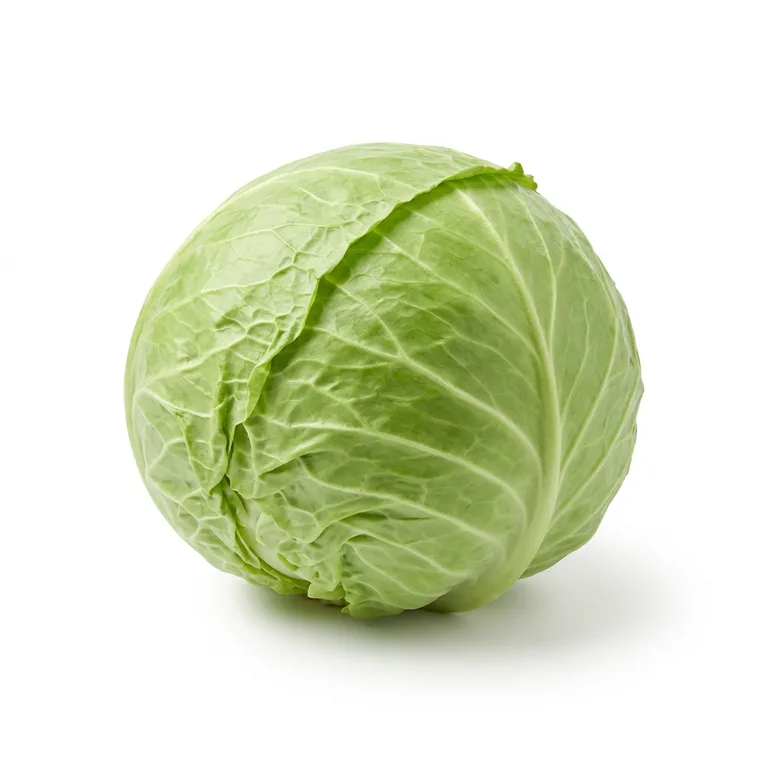
Quarter the cabbage through the core, cut out and discard the core, then slice each quarter crosswise into thin shreds about 1/8-inch thick using a chef's knife or mandoline. Reserve one or two of the large outer leaves before discarding the rest.
Transfer the shredded cabbage to a large mixing bowl. Sprinkle the salt evenly over the top and toss to distribute. Let it sit for 5 minutes, then massage and squeeze the cabbage firmly with both hands for 8–10 minutes, until it has released a significant amount of liquid and the shreds feel limp and wet — the brine should pool visibly at the bottom of the bowl.
Create a Fig account for step-by-step instructions, access to our full recipe library, and more!


 (16k)
(16k)