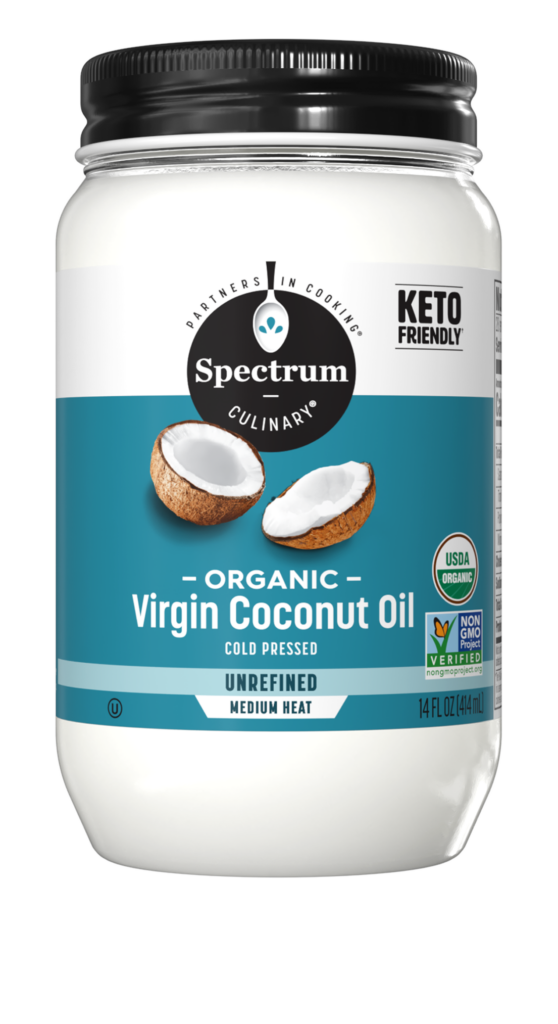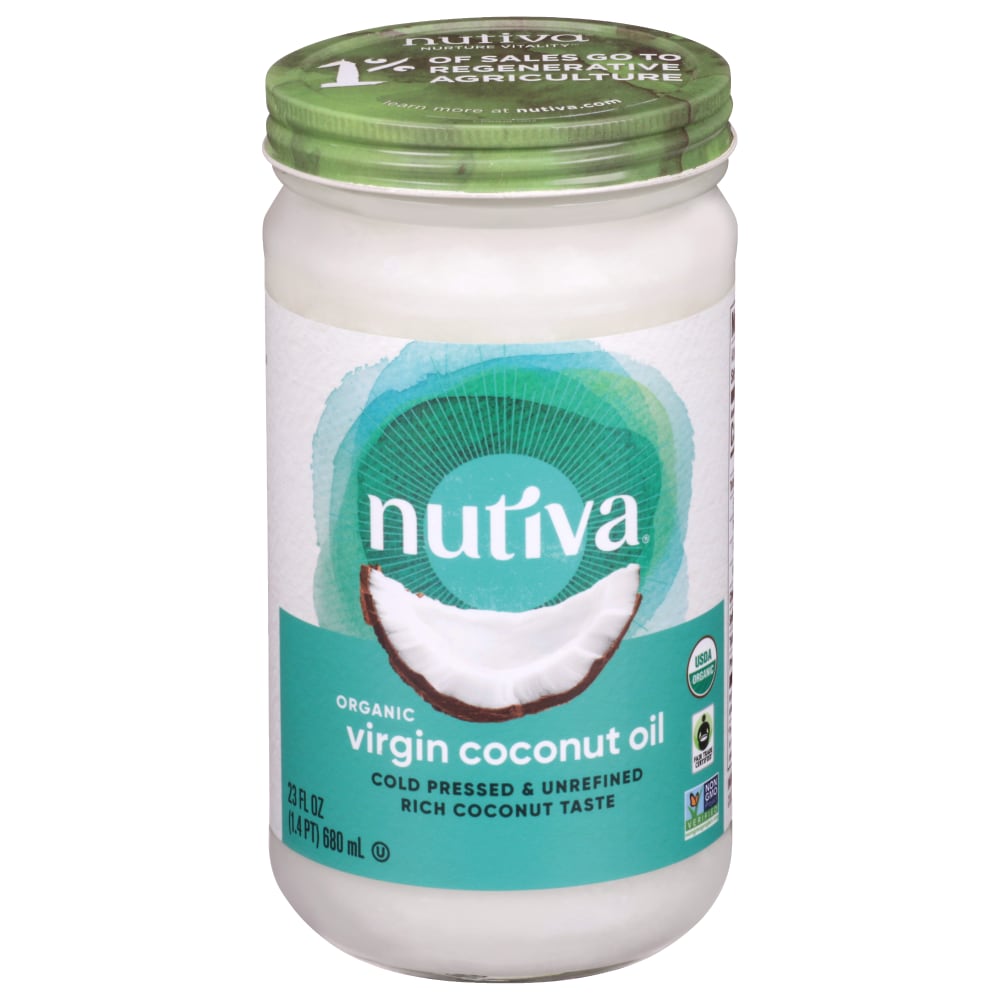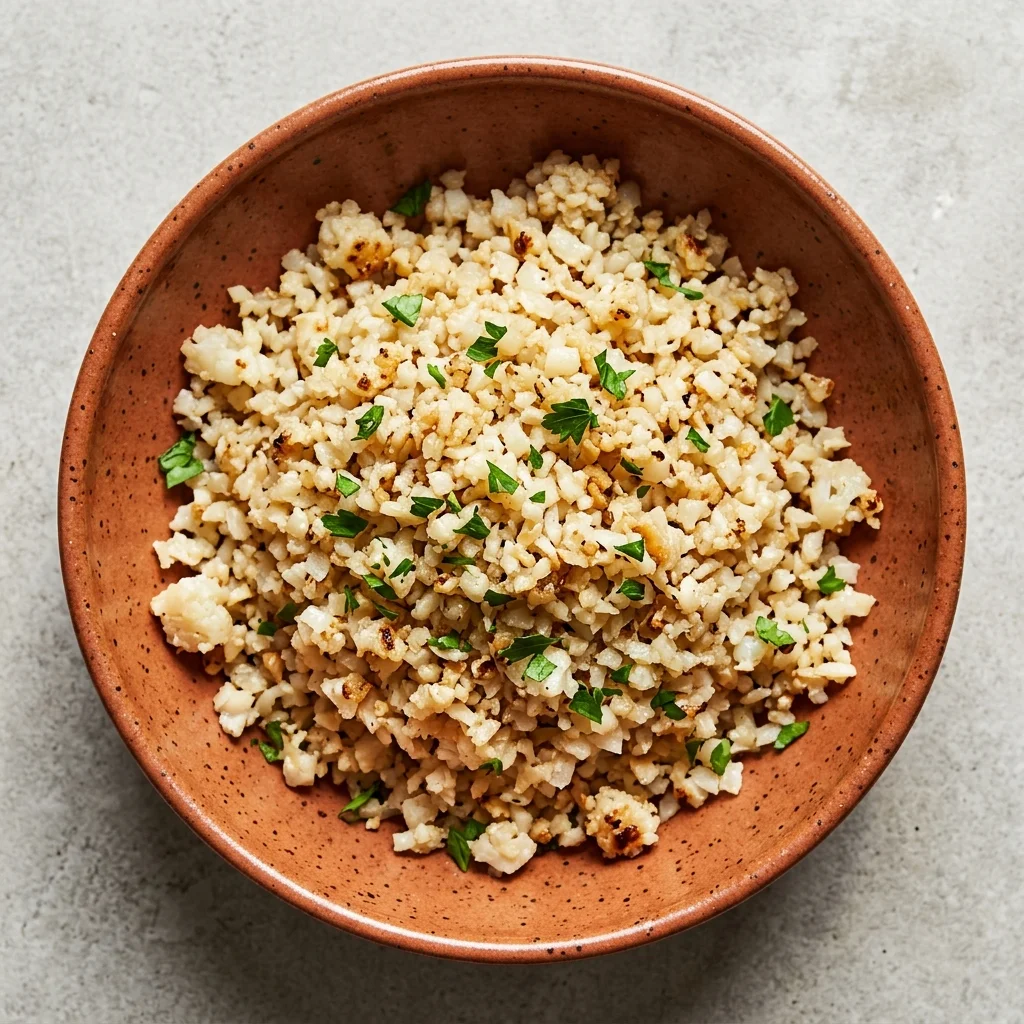
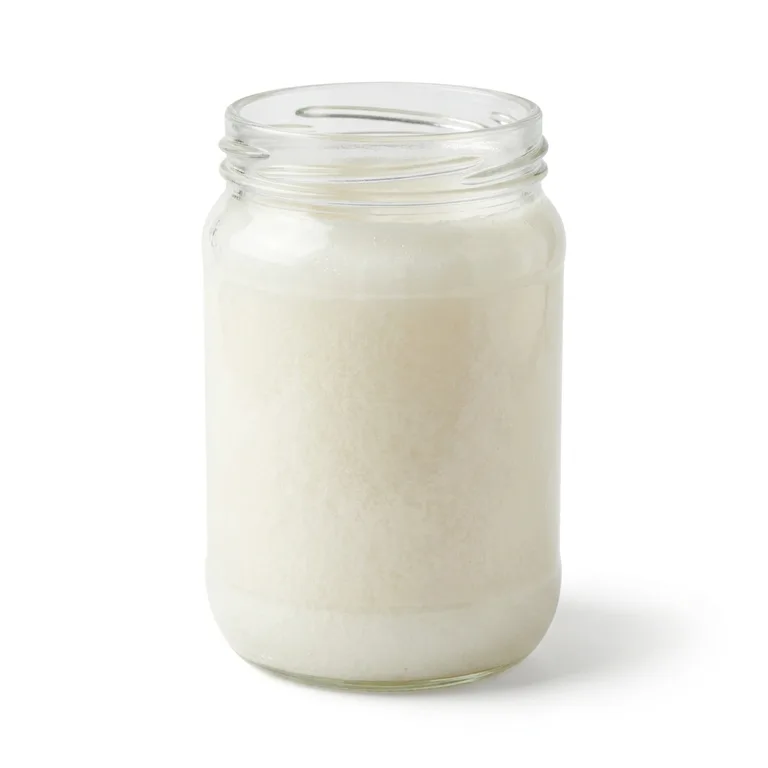
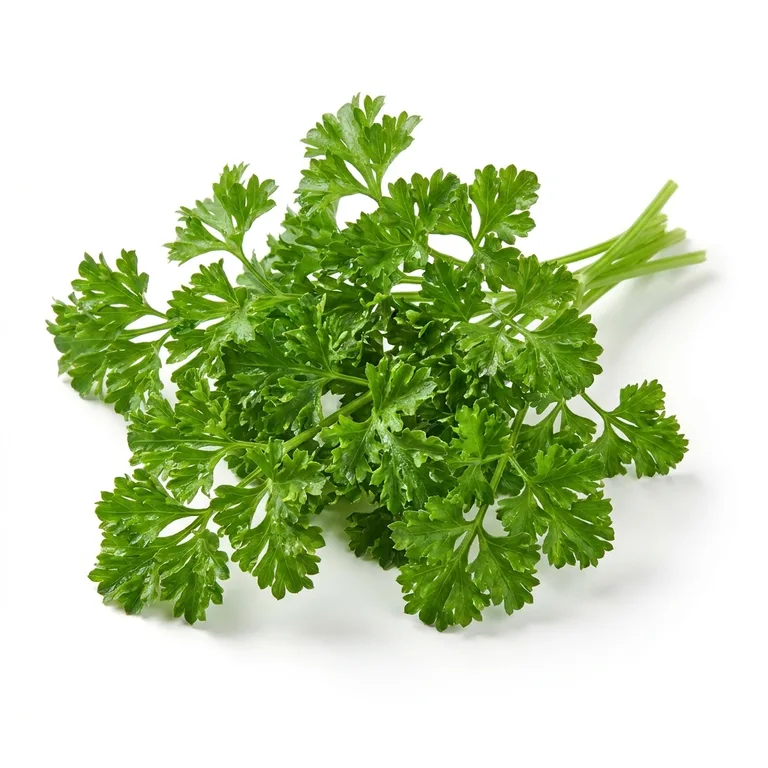
Cauliflower rice has a way of surprising people — it's light, subtly nutty, and soaks up flavors beautifully without the heaviness of a grain-based side. Coconut oil gives the garlic a gorgeous golden edge and adds a gentle richness that makes every bite feel intentional rather than like a compromise. The key move here is letting the cauliflower cook undisturbed long enough to drive off moisture and develop those lightly golden spots, which is what separates a great batch from a soggy one. A finishing hit of fresh lemon juice lifts the whole dish and keeps it tasting bright even as leftovers. For anyone navigating soy sensitivities, this is a genuinely satisfying swap — every ingredient is straightforward, with no hidden sauces or processed seasonings that tend to sneak soy derivatives into otherwise simple recipes. Scatter the parsley on top if you have it; it adds color and a clean herby note that makes the plate look as good as it tastes.
 About Fig
Fig is a food discovery app that helps you find foods and recipes that fit your dietary needs. Whether you have food allergies, intolerances, or follow a specific diet, Fig makes it easy to eat with confidence.
Learn more →4 servings
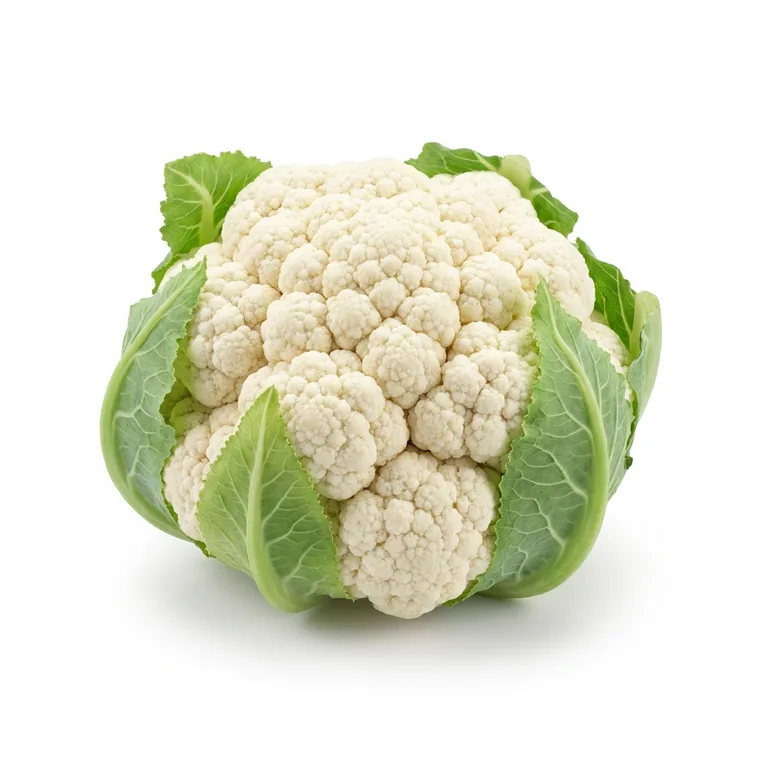
Working in two batches, pulse the cauliflower florets in a food processor 8–10 times until broken down into pieces roughly the size of rice grains — uneven is fine, but avoid over-processing into a paste. Alternatively, grate the florets on the large holes of a box grater.
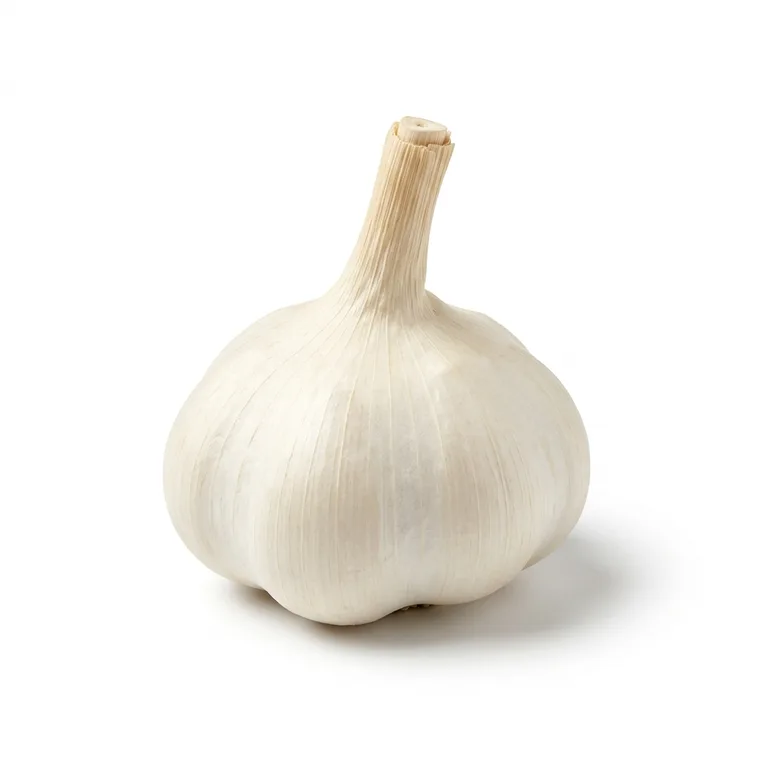
Heat the coconut oil in a large (12-inch) skillet over medium-high heat until shimmering. Add the garlic and cook, stirring constantly, until fragrant and just beginning to turn golden at the edges, about 30–45 seconds — watch closely, as it can brown quickly.
Create a Fig account for step-by-step instructions, access to our full recipe library, and more!


 (16k)
(16k)